"Jinu Is Alive in Our Hearts" — KPop Demon Hunters Directors Return to Seoul After Historic Oscar Win
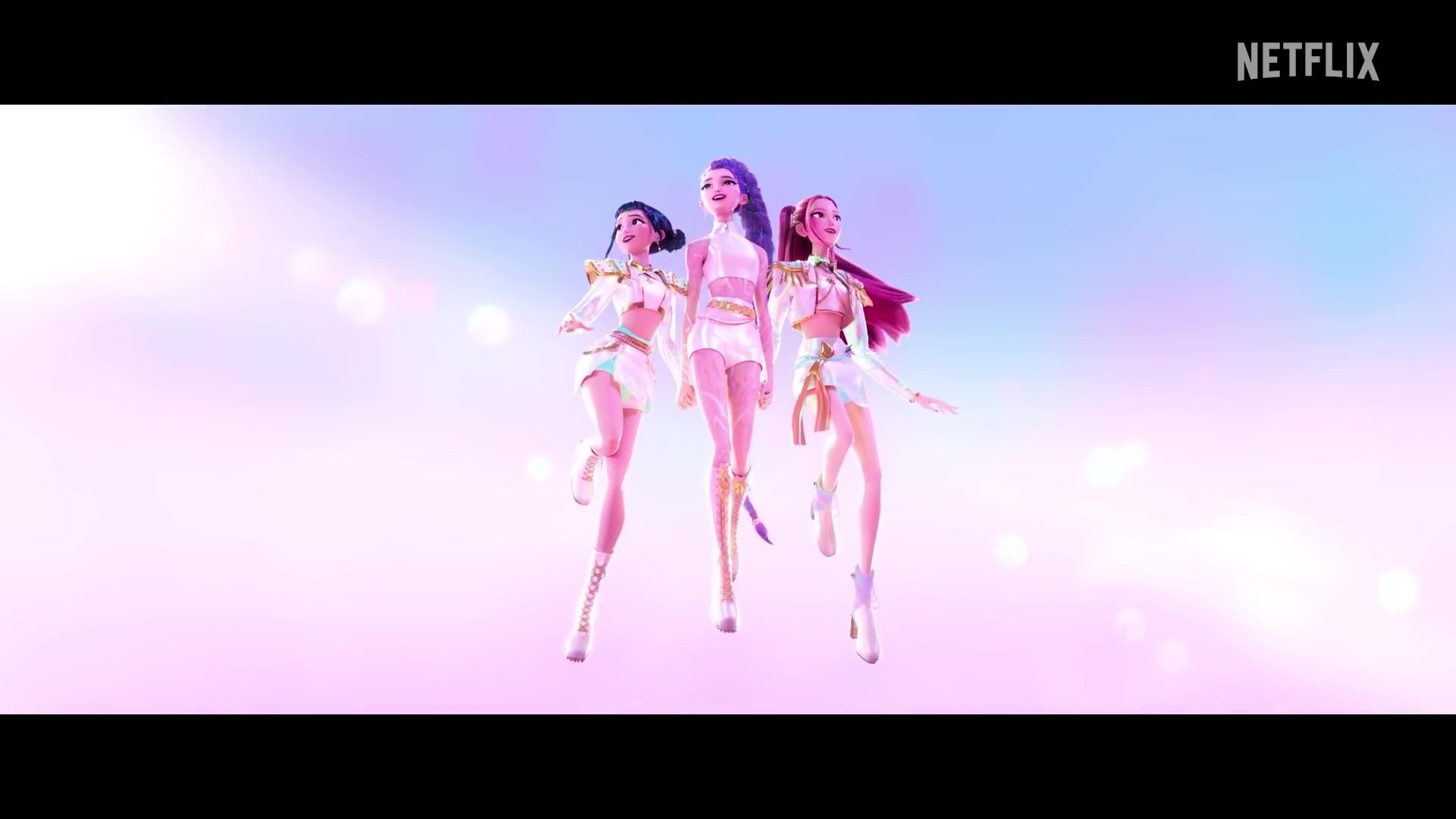
"Jinu Is Alive in Our Hearts" — KPop Demon Hunters Directors Return to Seoul After Historic Oscar Win
A full report from the April 1 press conference at CGV Yongsan: what Maggie Kang, Chris Appelhans, and EJAE said about the sequel, being Korean, the Oscar night orchestra mishap, and why DiCaprio holding a light stick made EJAE cry.
The room at CGV Yongsan I Park Mall was packed. Cameras were everywhere. And the first real laugh of the day came about three minutes in, when a reporter asked the question the entire KeDeHun fandom had been holding their breath about since March 15: Is Jinu coming back?
Chris Appelhans paused just long enough to make everyone nervous.
"Jinu is alive in our hearts," he said. "Beyond that, I can't say."
The room erupted. And with that, the KPop Demon Hunters post-Oscar Seoul press conference was underway.
The Room, the Team, the Moment
On April 1, 2026 — less than three weeks after KPop Demon Hunters swept the 98th Academy Awards — co-directors Maggie Kang and Chris Appelhans gathered at CGV Yongsan in central Seoul alongside singer-songwriter EJAE and music producers Lee Yu-han, Kwak Joong-kyu, and Nam Hee-dong of The Black Label.
It was Appelhans' first visit to Korea since the film's June 20 Netflix premiere. The press conference had been organized to mark the film's historic double win: Best Animated Feature and Best Original Song for "Golden" — making Kang and producer Michelle L.M. Wong the first people of South Korean descent to win in the animated feature category, and "Golden" the first K-pop song to win an Oscar for Best Original Song.
On stage, Kang and Appelhans posed for photographs with the two Academy Awards. Behind the press conference room, Seoul's streets told their own story. The Korean Economic Daily had reported that, partially due to the film's popularity, over 1.36 million international tourists had been drawn to Seoul in July 2025 alone — an increase of 23.1% from the same month in 2024, and the "largest monthly tally ever recorded." By April 2026, South Korea's Ministry of Culture, Sports and Tourism reported that visitor numbers had jumped by over 12% in the first quarter of 2026 compared to the same period in 2025. The city that KPop Demon Hunters had put on a million family itineraries was now welcoming its creators back with two Oscars in hand.
The Sequel: "Bigger, More Eventful" — And That's All You're Getting
The question everyone came to ask was the one that got the least amount of answer — and somehow that was satisfying.
Kang told the room: "We have the big idea locked in. But that's all I can give you." She promised the sequel would be "bigger and more eventful" than the first film, without elaborating.
When pushed by reporters for anything more — a genre hint, a character name, a setting — she said: "I would like to keep it confidential, no spoilers at all. We have a big idea, but I don't know the details yet."
The team framed the sequel as being built on the same philosophy as the original: "Just like the first one, we are making a movie that we personally want to see."
Appelhans offered one guiding principle. The fans, he said, "found the movie and brought it to the rest of the world," and the second film should repay that by surprising them rather than repeating what worked. The commitment to authenticity, he added, will carry through to the sequel — the stories, the mythology, all of it.
That word — authenticity — came up repeatedly. Kang shared that the next project will present a larger story with more events, supported by Netflix. Appelhans added that while the scale will grow, the heart of the story will remain the same. What matters most, he said, is the story itself and what makes it uniquely Korean.
Trot, Heavy Metal, and the Music of KPop Demon Hunters 2
Here is where Kang did offer something concrete — and it's the kind of thing that will have the fandom speculating for months.
When asked about the sequel's music, Kang said: "My thoughts haven't changed regarding the use of trot and heavy metal. Trot is a unique style of Korea that I want to introduce more to the world, and heavy metal is a base of K-pop that I want to showcase if the story allows."
For the uninitiated: trot (트로트) is a distinctly Korean genre — slow-tempo, emotionally raw, rooted in the Japanese colonial period and still beloved across generations in Korea. Heavy metal is, well, heavy metal — but Kang is correct that it has genuine K-pop roots, from early groups like ROCK'A'TRENCHCOAT through today's acts like TRBL. The idea of Huntrix taking on demons with a trot-infused battle anthem is, to say the least, something the fandom did not see coming.
EJAE also showed interest in exploring these directions in the planned film.
"The Koreanness Is the Soul of It"
The deepest part of the press conference was not about the sequel at all. It was about what the film means — to the people who made it, and to a generation of Koreans raised between cultures.
Appelhans, whose wife is Korean and who has been visiting Korea for over two decades, spoke about what living between cultures actually teaches you.
"The Koreanness is the soul of it," he said. "Being a part of my wife's family for 20 years taught me a lot about the different ways that Koreans show love, the different ways they deal with pain. That was eye-opening to me, and it's half my life now."
He connected this to Rumi's arc directly. Rumi's story, he said, is about "somebody who has to suffer a lot, and coming through that makes them really strong." That resilience and sense of unity are what the film is really getting at when it comes to being Korean.
Kang spoke about the experience of being gyopo — ethnic Korean raised abroad — a subject she had touched on in her Oscar acceptance speech and returned to in Seoul with more room to expand.
She addressed what she called a common misunderstanding people have about gyopo: that they don't quite feel at home in either culture. The reality, she said, is often the opposite. "A lot of us who are straddling both cultures, like myself and EJAE, we are the ones who will be bridging that gap," she said. Being raised outside Korea, she added, hasn't made them any less Korean or any less proud of it.
She explained that most animation she watched growing up centered on Japanese culture, and that this project became her way of telling a story rooted in her own background. She also expressed hope that the film's success would help break down the invisible boundaries often placed on overseas Koreans.
The signing news that came two days later added a concrete dimension to this: Kang signed with Seoul-based talent agency The Present Co. for her activities in Korea, with her US agency UTA continuing to represent her overseas. She is now formally building a presence in both the Korean and North American entertainment industries — living the bridge she described.
EJAE: DiCaprio, Light Sticks, and Finally Getting Her Mom a Gift
EJAE had perhaps the most personal story to tell at the press conference — and she told it with the kind of unguarded honesty that has made her one of the most beloved voices in the KDH fandom since the film's release.
Born in Seoul, raised in America, rejected after nearly a decade as a trainee at SM Entertainment before pivoting to songwriting for acts including Red Velvet and Aespa — EJAE's path to the Oscars stage was anything but linear.
"I couldn't have imagined any of this would blow up like this," she said.
And then came the detail that instantly became one of the most-shared quotes from the entire press conference.
EJAE said she didn't look at the audience during the "Golden" performance at the Oscars because she was too nervous. It was only afterward that she found out what had been happening in the seats. "Seeing Leonardo DiCaprio holding a light stick afterward made me realize the true power of K-culture," she said.
"That's when the tears came. I was so proud."
She also spoke about the weight of performing with traditional Korean music on the Oscars stage — the Hunter's Mantra, the hanbok dancers — in front of an audience that included, as she put it, "Leonardo DiCaprio, Steven Spielberg, and all." The performance opened with elements drawn directly from Korean folk tradition, and it was a deliberate choice. EJAE said she felt proud to perform with traditional Korean music on such a prestigious stage.
The last question of the day, as reported by The Korea Herald, was blunt: with "Golden" at No. 1 on the Billboard Hot 100 and certified 5x Platinum, what kind of royalties is she looking at?
"It takes a while to come through," she said, laughing. "But I'm excited. I think I can finally get my mom a gift."
The Oscar Night Mishap — A Grace Note
No recap of the Seoul press conference would be complete without the moment that had drawn widespread anger online: the orchestra playing off one of the producers mid-speech as the "Golden" team accepted Best Original Song.
Producer Lee Yu-han addressed it with remarkable composure.
He said all he'd wanted to say was a quick thank-you to their families and the rest of the team. "It was meant to be short, so I was a little disappointed it got cut off," he said. "But it was such an incredible moment that I just enjoyed every bit of it."
The grace of that answer — no bitterness, just gratitude — felt entirely in keeping with the spirit of a film about finding strength in what you cannot control.
The KeDeHun Fandom: What the Press Conference Meant in Korea
For the Korean fandom — the KeDeHun (케데헌) — the April 1 press conference carried a significance beyond news value. It was the first time the full core team (both directors, EJAE, and the Black Label producers) had gathered publicly in Seoul since the film's release, and it happened on home soil, at CGV Yongsan, a cinema complex that sits in the heart of the city.
Within South Korea, KPop Demon Hunters has been noted as a cultural phenomenon across media outlets, many highlighting the soundtrack, characters, and story, as well as homages to anime and representation of fandom and Asian cultures.
The resonance runs deep for Korean fans precisely because the film is about them — or rather, about people who grew up holding two cultural identities and never quite knowing which one to claim. Kang and EJAE speaking publicly in Seoul about the gyopo experience, about growing up between worlds, about Korean pride that isn't contingent on where you were born — these are conversations the KeDeHun fandom has been having internally since the film released. Hearing them reflected back from the Oscar-winning director and songwriter, in Korean, in Seoul, landed differently.
Social media response across Korean platforms following the press conference was immediate and emotional. Many fans noted that Kang's comments about invisible boundaries placed on overseas Koreans spoke to their own experiences. EJAE's DiCaprio light stick moment went viral on X within hours.
The overriding sentiment: 우리 영화 맞아 — "This really is our film."
What It All Means for KPop Demon Hunters 2
Reading between the lines of the April 1 press conference, a few things come into focus for the sequel.
The "Koreanness" is non-negotiable. Both directors went out of their way to emphasize that the cultural authenticity of the first film will be carried into the second. The mythology, the emotional architecture, the music — all of it will remain rooted in Korean culture, even as the scale expands.
The music will go deeper into Korean genres. Trot and heavy metal are not casual hints. The first film's soundtrack was built on K-pop conventions with Korean mythological themes woven in. A sequel that incorporates trot — with its specific emotional associations for Korean audiences — would be a bolder, more specifically Korean creative choice. That Kang has been thinking about this since at least August 2025 suggests it's not a passing idea.
Jinu is the open question. Appelhans' answer was crafted too carefully to be dismissive. "Alive in our hearts" is not "no." The fandom will be parsing those four words until 2029.
The sequel will surprise, not repeat. The most consistent thing both directors said — at the Oscars, at the Golden Globes, and now in Seoul — is that they do not want to make the same film twice. For a fandom that loves the first film deeply, that is both exciting and slightly terrifying. It is also the correct creative instinct.
Key Quotes from the Seoul Press Conference
Maggie Kang on the sequel: "We have the big idea locked in. We plan to make a film that is even bigger in scale and more eventful than the first one. Just like the first one, we are making a movie that we personally want to see."
Chris Appelhans on Jinu: "Jinu is alive in our hearts. Beyond that, I can't say."
Chris Appelhans on the sequel's guiding principle: "The fans found the movie and brought it to the rest of the world. The second film should repay that by surprising them rather than repeating what worked."
Chris Appelhans on Korean identity: "The Koreanness is the soul of it. Being a part of my wife's family for 20 years taught me a lot about the different ways Koreans show love, the different ways they deal with pain. That was eye-opening to me, and it's half my life now."
Maggie Kang on being gyopo: "A lot of us who are straddling both cultures, like myself and EJAE, we are the ones who will be bridging that gap. Being raised outside Korea hasn't made us any less Korean or any less proud of it."
Maggie Kang on the sequel's music: "My thoughts haven't changed regarding the use of trot and heavy metal. Trot is a unique style of Korea that I want to introduce more to the world."
EJAE on the Oscars performance: "I didn't look at them during the performance because I was too nervous, but seeing Leonardo DiCaprio holding a light stick afterward made me realize the true power of K-culture."
EJAE on not imagining this moment: "I couldn't have imagined any of this would blow up like this. That's when the tears came. I was so proud."
Producer Lee Yu-han on the orchestra mishap: "It was meant to be short, so I was a little disappointed it got cut off. But it was such an incredible moment that I just enjoyed every bit of it."
Frequently Asked Questions
Where was the April 2026 KPop Demon Hunters press conference held? At CGV Yongsan I Park Mall in central Seoul, on April 1, 2026, to celebrate the film's two Oscar wins at the 98th Academy Awards.
Who attended the Seoul press conference? Co-directors Maggie Kang and Chris Appelhans, singer-songwriter EJAE, and music producers Lee Yu-han, Kwak Joong-kyu, and Nam Hee-dong of The Black Label.
What did the directors say about KPop Demon Hunters 2? Kang confirmed the sequel will be "bigger and more eventful" than the first film. She hinted at incorporating trot and heavy metal into the music. Appelhans emphasized the sequel will surprise fans rather than repeat the original.
Is Jinu coming back in KPop Demon Hunters 2? Appelhans said "Jinu is alive in our hearts — beyond that, I can't say." No official confirmation either way.
What did EJAE say about the Oscars performance? She revealed she was too nervous to look at the audience during "Golden," and only learned afterward that Leonardo DiCaprio had been waving a light stick. She said that was the moment she cried.
Did Maggie Kang sign with a Korean agency? Yes. Following the press conference, Kang signed with Seoul-based talent agency The Present Co. for her Korean market activities, while UTA continues to represent her in the US.
Sources: The Korea Herald (Moon Ki-hoon, April 1, 2026); Korea Times (April 1, 2026); allkpop (April 1, 2026); UPI / Yonhap (April 2, 2026); Wikipedia — KPop Demon Hunters; The Korea Herald (Kang signs with The Present Co., April 3, 2026). All quotes are drawn from official press conference reporting by accredited media outlets. kpopdemon.com is an unofficial fan community not affiliated with Netflix or Sony Pictures Animation.

About the Author
Alex Chen
K-Pop Culture & Animation Expert
Alex Chen is a Korean Wave culture researcher and animation film critic with over 5 years of experience analyzing the K-pop industry. Holding a Master's degree in East Asian Studies, Alex has contributed to major entertainment publications including Variety Asia and The Hollywood Reporter. With fluency in Korean, English, and Chinese, Alex brings deep cultural insights to K-pop and Asian animation content analysis.
Expertise & Credentials:
- M.A. in East Asian Studies
- 5+ years K-pop industry analysis
- Animation film critic & consultant
- Contributor to Variety Asia & THR
- Fluent in Korean, English, Chinese