KPop Demon Hunters' Road to the Oscars: From Netflix Debut to Historic Double Win
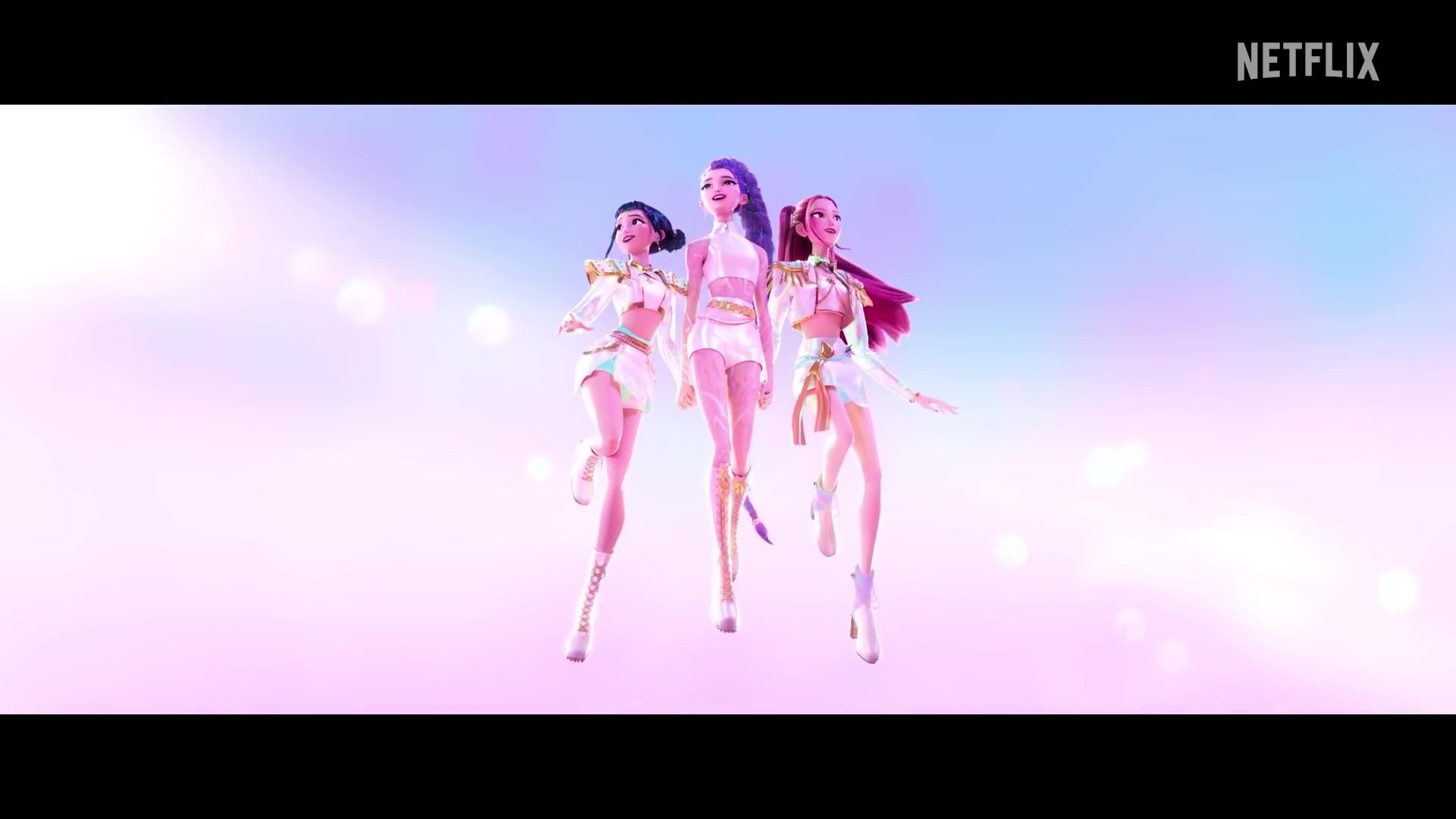
On the night of March 15, 2026, EJAE stood at the Dolby Theatre podium, tears running down her face, and said:
"Growing up, people made fun of me for liking K-pop, but now everyone's singing our song and all the Korean lyrics. I'm so proud. I realized that the song and this award are not about success — they're about resilience."
In that single moment, KPop Demon Hunters completed one of the most remarkable awards-season runs in recent Hollywood history — sweeping from a Netflix streaming debut the previous June all the way to two Oscar wins in the space of nine months. This is the full story of how it happened.
The Journey at a Glance
| Date | Ceremony | Award |
|---|---|---|
| Jan. 5, 2026 | Critics Choice Awards | Best Animated Feature + Best Song |
| Jan. 12, 2026 | 83rd Golden Globe Awards | Best Motion Picture – Animated + Best Original Song ("Golden") |
| Feb. 1, 2026 | 68th Grammy Awards | Best Song Written for Visual Media ("Golden") |
| Mar. 15, 2026 | 98th Academy Awards | Best Animated Feature + Best Original Song ("Golden") |
Chapter 1: The Summer That Changed Everything (June 2025)
To understand the awards sweep, you have to go back to June 20, 2025 — the day KPop Demon Hunters premiered on Netflix.
The film — directed by Maggie Kang and Chris Appelhans, produced by Sony Pictures Animation — had already generated buzz from a trailer that went viral across TikTok and YouTube. But nobody predicted what was about to happen. Within weeks, the film became the most-watched animated title in Netflix history. Within months, it surpassed every film the streamer had ever released, across all languages and genres, landing at over 325 million views by the end of 2025.
The soundtrack was its own phenomenon. "Golden" — the emotional centerpiece performed by EJAE, Audrey Nuna, and Rei Ami — hit No. 1 on the Billboard Hot 100 and stayed there for eight weeks. The KPop Demon Hunters soundtrack became the first in history to place four simultaneous songs in the Billboard Hot 100 Top 10. The #TakedownChallenge flooded TikTok. Korean fans coined the fandom name KeDeHun (케데헌). Light sticks became a staple at fan screenings worldwide.
By the time awards season opened, this was not just a successful film. It was a cultural event.
Chapter 2: Critics Choice and the First Gold (January 5, 2026)
The awards season campaign began with the Critics Choice Awards, where KPop Demon Hunters won Best Animated Feature and Best Song for "Golden." The wins served as an early signal — and an important data point that would repeat itself all awards season long.
Chapter 3: A Golden Night at the Golden Globes (January 12, 2026)
At the 83rd Golden Globe Awards, KPop Demon Hunters faced formidable competition in the Best Animated Feature category: Arco, Demon Slayer: Kimetsu no Yaiba — Infinity Castle, Elio, Little Amélie or the Character of Rain, and Pixar's Zootopia 2 were all nominated.
It won.
Directors Kang, Appelhans, and producer Michelle Wong accepted the award. Kang's speech set the tone for everything that was to come:
"Thanks to the Golden Globes and everyone who believed that a movie so deeply rooted in Korean culture would resonate with global audiences. Through this film we really wanted to depict female characters the way that we know women — which is really strong and bold, really silly and weird, and really hungry for food… and sometimes a little bit thirsty."
Appelhans framed the film's larger meaning simply: "The film is a love letter to music and the power it has to connect us, to make us see some kind of shared humanity."
"Golden" then took home Best Original Song as well. Songwriter and Rumi's singing voice EJAE accepted through tears, referencing the decade she spent training at SM Entertainment hoping to become a K-pop idol — only to be rejected. "I worked tirelessly for 10 years to fill one dream, to become a K-pop idol, and I was rejected and disappointed that my voice wasn't good enough," she said. "So I leaned on songs and music to get through it. Now I'm here, as a singer and a songwriter."
The Golden Globes have historically been a strong predictor of the Oscar Best Animated Feature winner, misaligning only four times in the modern awards era. After this night, the Oscar trajectory was clear.
Chapter 4: K-Pop Makes Grammy History (February 1, 2026)
The 68th Grammy Awards delivered what many considered the most historically significant moment of the entire awards season — not just for KPop Demon Hunters, but for K-pop as a genre.
"Golden" won Best Song Written for Visual Media at the pre-telecast ceremony. In doing so, it became the first K-pop song in Grammy history to win a Grammy Award.
The significance of that sentence cannot be overstated. Despite BTS earning five Grammy nominations across their career — and being the first K-pop act ever to perform at the ceremony — no K-pop song had ever taken home a Grammy. That changed on February 1, 2026.
EJAE, accepting alongside co-writers Mark Sonnenblick, Park Hong Jun, Joong Gyu Kwak, Yu Han Lee, Hee Dong Nam, and Jeong Hoon Seo, spoke directly to what the win meant beyond the music itself:
"I'm so, so proud to be Korean. Growing up, people didn't know where Korea was or what Korea was, and that's why it's so incredible to have the song 'Golden' being sung all over the world, singing the Korean lyrics word by word. It means so much. I think this award is about representation."
Audrey Nuna — who provides the singing voice of Mira and was not yet aware of the pre-telecast result — had spoken earlier about what a Grammy nomination meant culturally. "You're going to see three Korean faces," she said. "To think about the kids who are going to see that, and hopefully for that to shape their understanding of what they can do in this world, is the stuff that is giving me chills up my spine."
The Grammy win also coincided with a broader moment for K-pop at the ceremony: BLACKPINK member Rosé became the first solo K-pop artist to perform at the Grammy Awards, opening the show alongside Bruno Mars. February 1, 2026 now stands as one of the most consequential nights in the global history of K-pop.
Chapter 5: The Oscars — A Night of Korean Pride (March 15, 2026)
By the time the 98th Academy Awards arrived, KPop Demon Hunters had already won every major precursor award in both the animated feature and original song categories. Yet the Oscars still felt like the culmination — the night that would seal the film's place in cinema history.
The evening began with EJAE, Audrey Nuna, and Rei Ami performing "Golden" live on the Dolby Theatre stage. Their performance opened with the "Hunter's Mantra" — set to Korean traditional music, with dancers in hanbok (Korean traditional dress) acting out the opening sequence. The crowd, equipped with light sticks, waved along in unison. It was a sight that would have seemed impossible just a few years earlier at Hollywood's most prestigious ceremony.
KPop Demon Hunters had already won Best Animated Feature earlier in the evening when EJAE accepted Best Original Song — making "Golden" the first K-pop song to win an Oscar for Best Original Song.
The acceptance speeches were among the most emotionally resonant of the night.
EJAE, overcome with emotion: "Growing up, people made fun of me for liking K-pop, but now everyone's singing our song and all the Korean lyrics. I'm so proud. I realized that the song and this award are not about success — they're about resilience."
Director Maggie Kang, accepting Best Animated Feature, spoke directly to Korean audiences and future generations:
"For those of you who look like me, I am so sorry that it took us so long to see us in a movie like this. But it is here, and that means that the next generations don't have to go longing. This is for Korea, and for Koreans everywhere."
Co-director Chris Appelhans completed the night's message: "Music and stories have this power to connect us as humans across cultures and borders. So I just want to take a moment to say to all the young filmmakers, artists, musicians in all corners of the globe: Tell your story, sing in your voice. I promise you, the world is waiting."
Why "Golden" Won Everything: The Song's Cultural Architecture
To understand why "Golden" swept every major award category it entered, you have to understand what the song actually does.
"Golden" is not a traditional film song. It is not a ballad played over end credits. It functions as the emotional and narrative spine of the entire film — the moment when Rumi accepts both her human and demonic heritage, when Huntrix becomes whole, and when the Honmoon is strongest. The song literally saves the world within the story's logic.
Lyrically, it draws on a universal theme — self-acceptance through perceived failure — but roots it in a specifically Korean experience. The Korean lyrics in the chorus are not a stylistic choice. They are the point. EJAE's own history of rejection from the K-pop idol system gives the song an autobiographical weight that listeners can feel without knowing the backstory.
Musically, the production draws on both Western pop structure and K-pop production aesthetics — precise, layered, with a build that mirrors K-pop's signature emotional escalation. It is at once accessible and culturally specific, which is why it could top the Billboard Hot 100 and move Grammy voters in the same breath.
"Golden" did not win because it was a K-pop song. It won because it was the right song for this moment.
The Bigger Picture: Korean Storytelling Arrives in Hollywood
The awards season run of KPop Demon Hunters is part of a larger — and accelerating — shift in how Hollywood approaches Korean culture and Korean-American stories.
The trajectory is clear in retrospect: Parasite won Best Picture at the 2020 Oscars, demonstrating that non-English language films could compete at the highest level. The global dominance of Squid Game, BTS, and BLACKPINK through 2021–2023 normalized Korean pop culture as mainstream Western entertainment. KPop Demon Hunters is the next chapter: a story written by a Korean-American director, centered on Korean mythology and K-pop, produced by a major Hollywood studio, and recognized as the best animated film of its year.
Director Maggie Kang first pitched the idea that became KPop Demon Hunters to Sony in 2018 — driven by her desire to create a story rooted in her Korean heritage. It took seven years and a film that broke every Netflix record to prove that the appetite for those stories was not just real, but enormous.
What does that mean going forward? The sequel — confirmed for a 2029 release — will be watched as a test case. If KPop Demon Hunters 2 performs at the level of the original, it will accelerate studio interest in Korean-American storytelling beyond the single-event model. It will signal to the industry that what happened with KPop Demon Hunters was not an anomaly — it was a forecast.
As EJAE said at the Grammys: "This award is about representation." And representation, once earned, tends to compound.
The Record Book: KPop Demon Hunters' Full Awards Legacy
For the historical record, here is a complete summary of the major accolades KPop Demon Hunters received during the 2025–2026 awards season:
- Best Animated Feature — 98th Academy Awards (2026)
- Best Original Song ("Golden") — 98th Academy Awards (2026)
- Best Animated Feature — 83rd Golden Globe Awards (2026)
- Best Original Song ("Golden") — 83rd Golden Globe Awards (2026)
- Best Song Written for Visual Media ("Golden") — 68th Grammy Awards (2026) (first K-pop Grammy win in history)
- Best Animated Feature — Critics Choice Awards (2026)
- Best Song ("Golden") — Critics Choice Awards (2026)
Frequently Asked Questions
Did KPop Demon Hunters win an Oscar? Yes — two Oscars. Best Animated Feature and Best Original Song ("Golden") at the 98th Academy Awards on March 15, 2026.
Did "Golden" win a Grammy? Yes. "Golden" won Best Song Written for Visual Media at the 68th Grammy Awards on February 1, 2026, making it the first K-pop song ever to win a Grammy.
Who sang "Golden" at the Oscars? EJAE, Audrey Nuna, and Rei Ami — the real singing voices behind HUNTR/X — performed "Golden" live at the 98th Academy Awards. The performance opened with Korean traditional music and dancers in hanbok.
Who directed KPop Demon Hunters? The film was co-directed by Maggie Kang and Chris Appelhans, and produced by Sony Pictures Animation for Netflix.
Is there a KPop Demon Hunters sequel? Yes — KPop Demon Hunters 2 was officially confirmed on March 12, 2026, with both directors returning. Target release is 2029. Read our full sequel guide →
Sources: Netflix Tudum, The Hollywood Reporter, Billboard, Variety, Animation Magazine, ABC7. All quotes are drawn from official acceptance speeches and press room interviews. kpopdemon.com is an unofficial fan community not affiliated with Netflix or Sony Pictures Animation.

About the Author
Alex Chen
K-Pop Culture & Animation Expert
Alex Chen is a Korean Wave culture researcher and animation film critic with over 5 years of experience analyzing the K-pop industry. Holding a Master's degree in East Asian Studies, Alex has contributed to major entertainment publications including Variety Asia and The Hollywood Reporter. With fluency in Korean, English, and Chinese, Alex brings deep cultural insights to K-pop and Asian animation content analysis.
Expertise & Credentials:
- M.A. in East Asian Studies
- 5+ years K-pop industry analysis
- Animation film critic & consultant
- Contributor to Variety Asia & THR
- Fluent in Korean, English, Chinese